Anatomy of Cohabitation:
Architecture, Not Just Rules
The success of a co-housing venture is rarely determined by the capital invested. It's almost entirely dictated by the quality of the daily human experience.
While legally binding agreements and structured exit strategies are the necessary scaffolding of joint home ownership, they cannot prevent the subtle, day-to-day frictions of shared habitation. Legal frameworks dictate what happens when things go wrong, but spatial design dictates how things go right.
Human beings possess vastly different temperamental baselines and metabolic types. A space that feels energizing and stimulating to a highly driven, choleric personality might feel overwhelmingly chaotic to a phlegmatic individual who requires profound quiet and structured calm to recharge. Traditional housing models force these distinct behavioral archetypes to compromise within a singular, rigid layout.
Co-housing, when executed through strategic architectural design, eliminates this compromise.
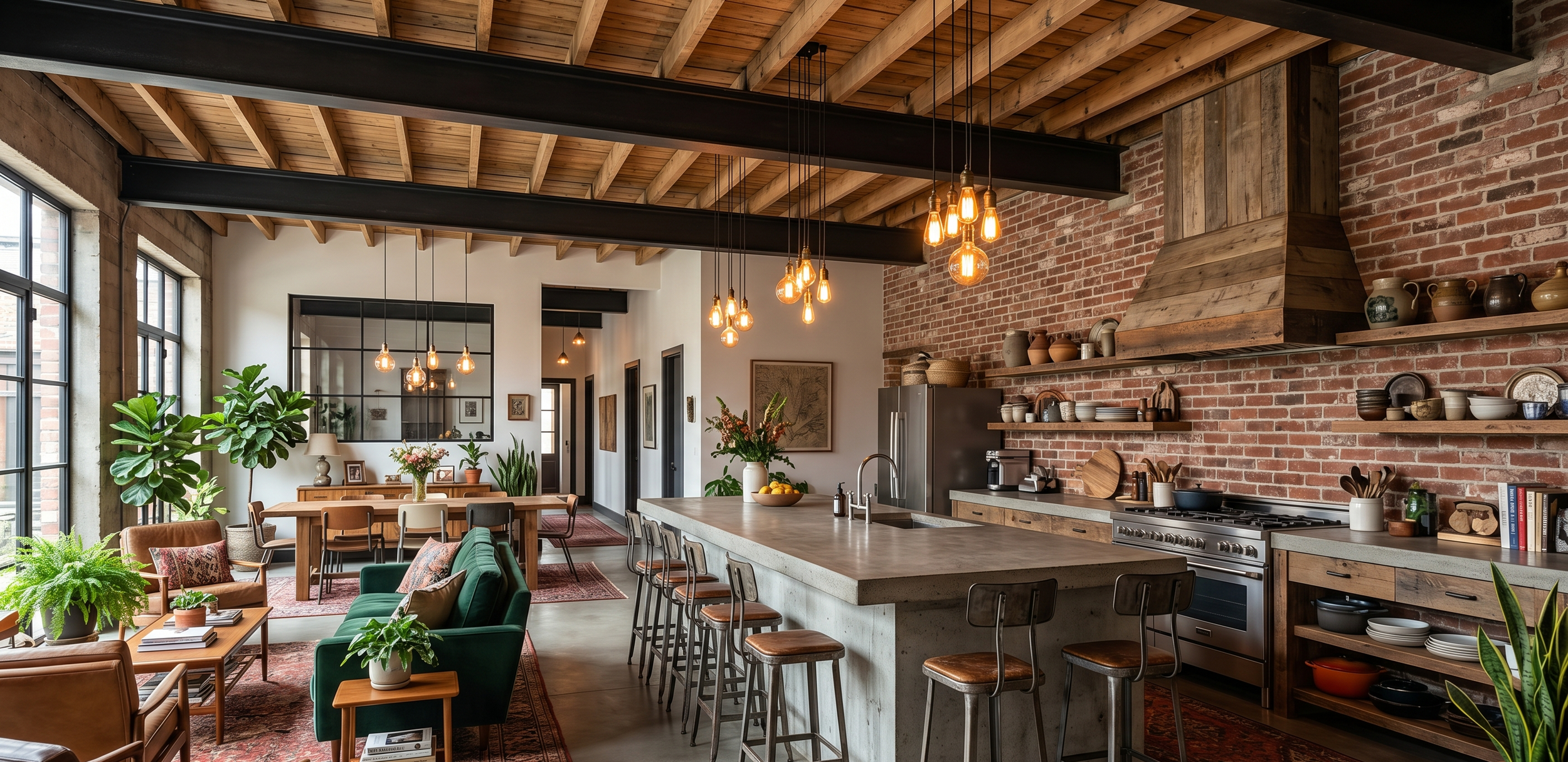
The aesthetic objective is not to manufacture a veneer of ostentatious luxury, but to cultivate a bohemian sybarite lifestyle deeply rooted in material honesty. This means utilizing heavy architecture, exposed board-formed concrete, untreated steel, and natural timber, to create flawless acoustic separation between private quarters.
The ability to retreat into complete, uninterrupted silence is the ultimate luxury in a shared property.
Think of it this way: after a high-velocity workweek navigating client demands and urban noise, the capacity to cross a threshold into your private wing and hear nothing, absolutely nothing, from the adjacent living quarters is transformative. This isn't achieved through lightweight drywall and acoustic insulation as an afterthought. It's achieved through thoughtful material selection from the conceptual design phase. Mass equals silence. A 200mm concrete wall doesn't just separate spaces, it creates two entirely distinct acoustic worlds.
Communal spaces must be designed with the same rigorous intention. A kitchen island is not just a food preparation surface. It's the sociodynamic core of the home. When designed with generous proportions and raw, tactile materials, it naturally facilitates interaction without forcing proximity.
We design these gathering points to accommodate the organic rhythms of shared living. Perhaps one co-owner is an early riser who enjoys a solitary espresso at 6 a.m., reading the news in silence. By 7 p.m., that same island becomes the stage for collaborative cooking, where multiple people can prep ingredients simultaneously without colliding, where conversation flows naturally across the honed granite or oiled walnut surface.
The architecture becomes a silent mediator, naturally zoning extroverted gatherings away from introverted sanctuaries, ensuring that the diverse temperaments of the co-owners are not just accommodated, but actively supported by their environment.
Circulation paths matter profoundly in co-housing. We design discrete entry sequences so that each co-owner can arrive home, shed the weight of the workday, and transition into their private realm without necessarily intersecting with others. This isn't about avoidance, it's about agency. The choice to engage or retreat should always belong to the inhabitant, never be dictated by a poorly conceived floor plan.
When architecture respects these invisible boundaries, cohabitation transforms from a logistical compromise into a genuine lifestyle advantage.
Ready to explore co-housing as a strategic investment?
Let's talk about how intelligent design can turn shared ownership into your greatest financial advantage.