The 50% That Changed Everything:
Redefining Home Ownership in Toronto
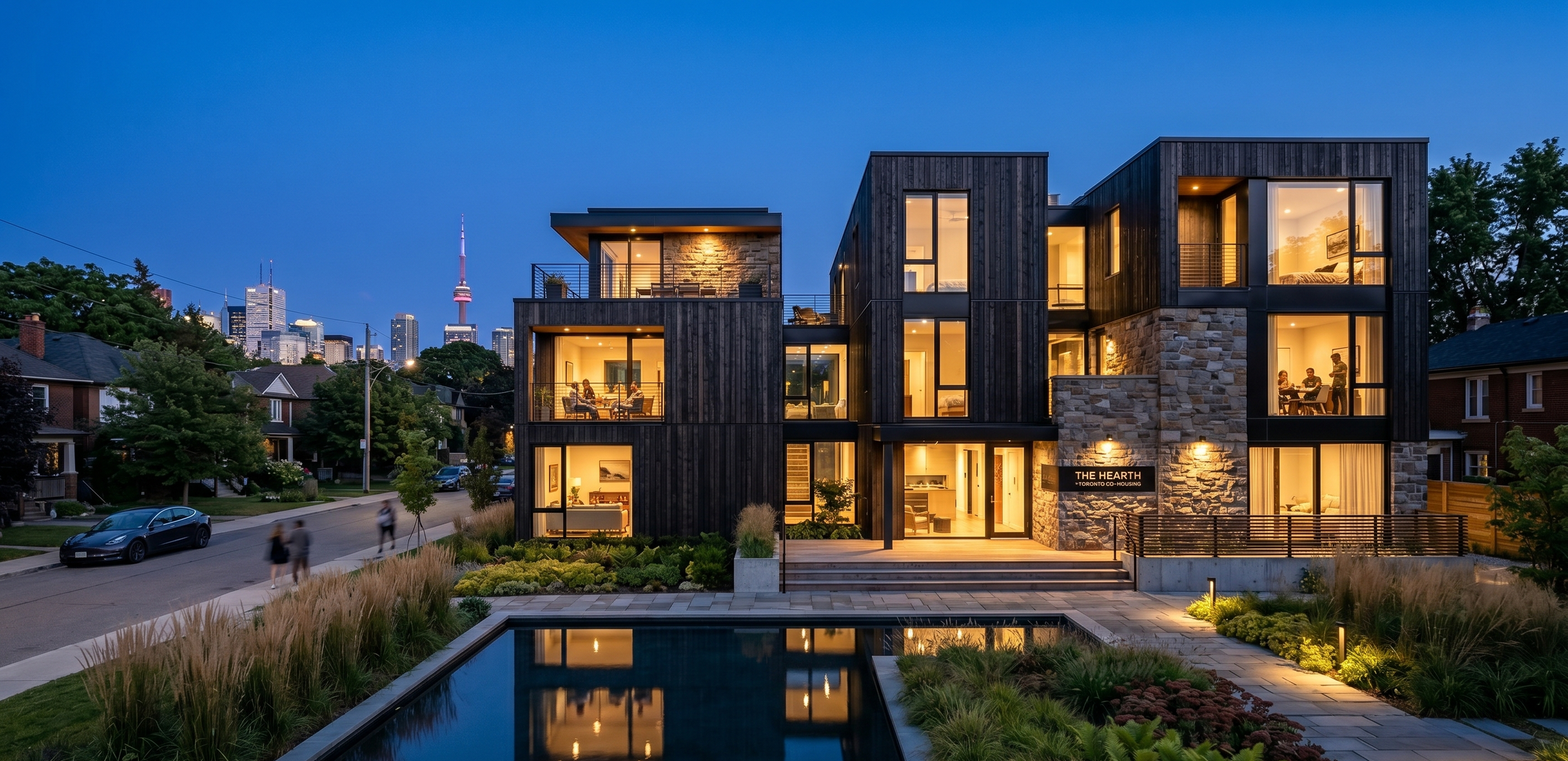
There's a distinct, undeniable moment in the trajectory of every generation when the established rules of the economic game abruptly stop working. For young professionals, creatives, and strategic thinkers currently living in Toronto, that moment hasn't just arrived. It has settled in, unpacked its bags, and fundamentally redefined the entire geographic and financial landscape of the city.
We're living through a profound structural shift in how we perceive, acquire, and inhabit space. The traditional narrative of home ownership, a solitary pursuit marked by a 30-year isolated mortgage, is rapidly becoming an artifact of the past.
The catalyst for this collective awakening? A staggering reality check: the cost of housing in the Greater Toronto Area recently saw an unprecedented increase of 50% compared to previous baseline years.
This is not a temporary market fluctuation. It's a permanent recalibration of urban economics. And it demands an equally profound evolution in how we approach architecture, design strategy, and the building of personal equity.
By 2021, millennials already accounted for the largest share of home buyers in Canada, making up 31% of the market. Yet this is the very demographic disproportionately impacted by the current housing access crisis. Over 80% of young residents desire homes that can adapt to changing lifestyles, moving away from rigid, outdated floor plans toward open, sustainable, and mixed-use environments.
The paradox is glaringly clear: the desire to build long-term equity and secure a performing asset remains fiercely strong, but the traditional offerings from standard architectural firms simply don't align with modern life balances.
When faced with seemingly insurmountable entry barriers, the instinctive human response is collaboration.
The concept of co-living is not novel in the GTA. However, there's a distinct evolution taking place right now: the shift from temporary co-living to permanent co-housing and joint ownership.
Co-housing is a highly sophisticated financial and architectural strategy. It's about actively pooling resources with trusted individuals to access a quality of life and a level of material honesty that would be entirely out of reach if attempted alone. True co-housing implies independent spaces within a shared property, a home designed almost like a multi-tiered ecosystem where each party has their own private sanctuary, yet benefits from the equity of the whole.
Currently, attempting to buy, design, and build a home with a group of co-owners is an exhausting exercise in project management. Users navigate a highly fragmented ecosystem, leading to severe cognitive overload and immense frustration. More importantly, it breeds the absolute biggest fear associated with co-ownership: interpersonal conflict.
Overcoming this urban crisis requires a radical reimagining of spatial design, where architecture acts as the silent mediator between co-owners.
Ready to explore co-housing as a strategic investment?
Let's talk about how intelligent design can turn shared ownership into your greatest financial advantage.