Real Estate Matchmaking:
The Art of Choosing Your Co-Owners
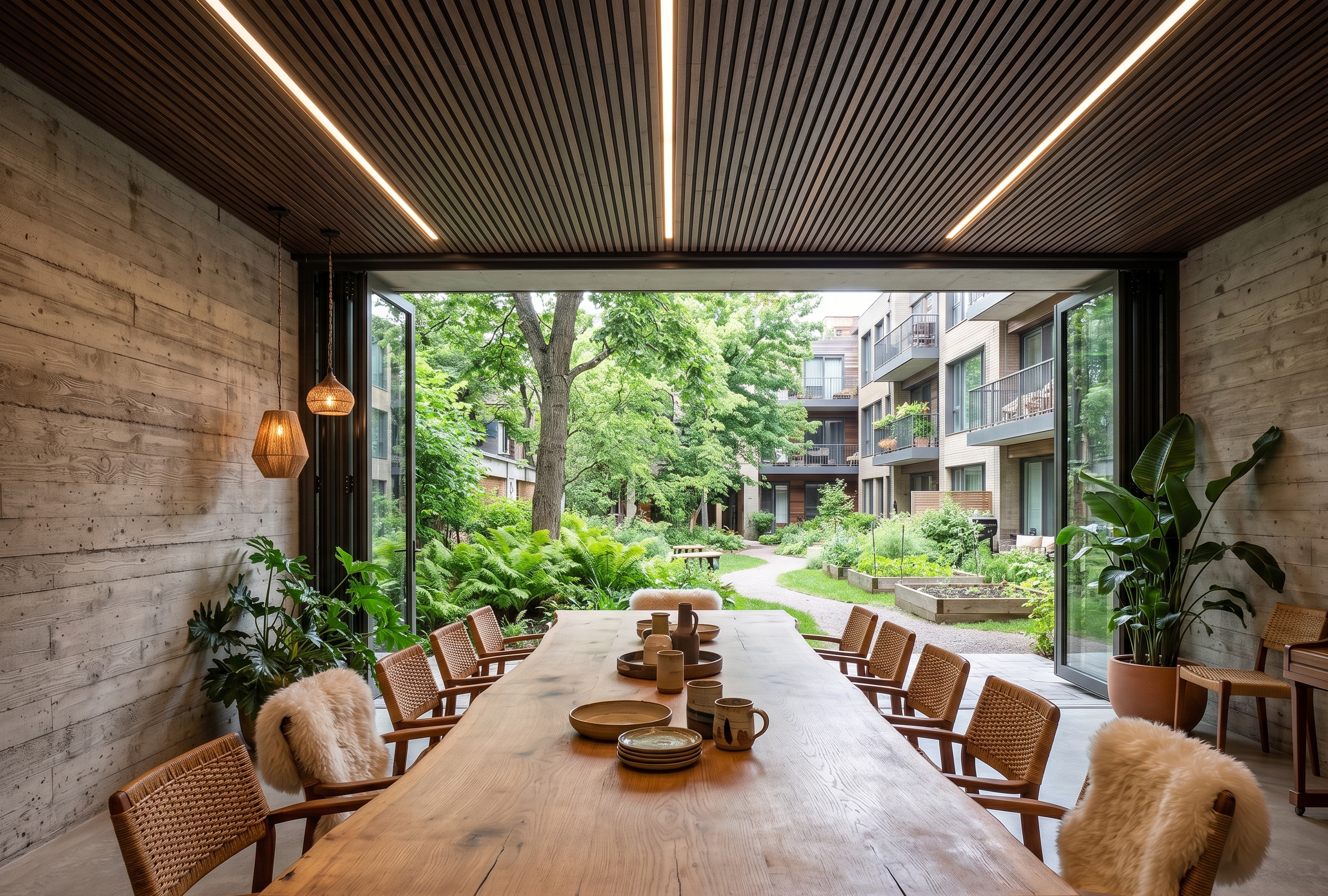
The architectural blueprint of a co-housing project is only as strong as the social contract that underpins it.
Buying a property with another party is a profound financial and personal entanglement, far exceeding the commitment of a standard roommate agreement. The most critical decision in the entire co-housing process occurs before a single property is viewed: the selection of your co-owners.
Trust is the non-negotiable foundation. However, trust alone is insufficient without total alignment on lifestyle trajectories and financial risk tolerance. A successful co-ownership group must have explicit, legally binding agreements detailing exactly how the property will be managed, maintained, and eventually, dissolved.
What is the protocol if one party wishes to sell their equity? What happens if one co-owner wants to renovate their private wing but the other does not? How are shared maintenance costs for communal spaces divided? What is the decision-making process for major capital expenditures like a new roof or HVAC system?
These conversations are uncomfortable, but they are essential. The time to have them is before the offer is signed, not three years into ownership when resentments have calcified.
Beyond the legal framework, there must be a deep philosophical alignment on what the home represents. Is this purely a financial investment vehicle, or is it a long-term primary residence? Are both parties committed to maintaining the property to a high standard, or is one person comfortable with deferred maintenance while the other demands pristine conditions?
Lifestyle compatibility extends into the details of daily routines. If one co-owner is a night owl who entertains frequently, hosting dinner parties that extend past midnight, and the other is an early-rising professional who requires silence by 10 p.m., even the best acoustic separation will be tested. Architecture can mitigate these conflicts, but it cannot eliminate them entirely if the fundamental social contract is misaligned.
Furthermore, the architecture must anticipate the inevitable expansion and evolution of the co-owners' lives. A space designed for two young professional couples must be inherently flexible enough to adapt when one of those families welcomes a newborn. If the physical space cannot gracefully accommodate the introduction of a child, the acoustic demands of a nursery, and the shifting rhythms of early parenthood, the social contract will inevitably fracture.
We design for these transitions by building in spatial flexibility from the beginning. A ground-floor bedroom that initially serves as a home office can seamlessly convert into a nursery. A secondary living area that starts as a shared media room can be reconfigured into a private family zone when needed.
Intentional co-housing requires designing for both the present reality and the inevitable future shifts of its inhabitants. The architecture must be forgiving, adaptable, and resilient enough to support the co-owners through multiple life chapters without requiring structural upheaval.
Ready to explore co-housing as a strategic investment?
Let's talk about how intelligent design can turn shared ownership into your greatest financial advantage.