Vision Before Brick: Why Conceptual Design is Your Project's Most Critical Financial Tool
Estimated Reading Time: 7 min
Category: Design & Construction Strategy
There's a phrase you hear on job sites, whispered between contractors with a knowing look: "Paper tolerates everything."
It means that what's drawn on plans rarely survives contact with reality. And in the traditional model—where design and construction exist in separate worlds—this is often true.
We see it constantly: homeowners who fall in love with beautiful sketches that ignore the physics of load-bearing walls. Or worse, projects that break ground with half-formed plans, resolving critical decisions on the fly. In construction, "on the fly" is just another way of saying expensive mistake.
At Atmosphere Studio, we work differently. For us, the concept stage isn't an abstract creative exercise—it's the first phase of physical construction. A virtual rehearsal where we test everything: sight lines, material feasibility, thermal performance, cost.
If you're building in a demanding market or undertaking a comprehensive renovation, understanding this distinction changes everything. Rigorous conceptual design isn't an expense. It's an insurance policy. A way to eliminate uncertainty before the first excavator touches soil.
The 1:10 Rule: Design as Financial Strategy
There's an unwritten law in real estate development:
Fixing a mistake in the design phase costs $1.
Fixing it in technical drawings costs $10.
Fixing it on the construction site costs $100 (or more).
When we develop a concept, we bring construction cost knowledge into the room from day one. We don't design blindly.
Most budgets don't break because of material costs. They break because of change orders—those last-minute revisions that happen when a client walks into the framed space and realizes, "I didn't imagine it would feel like this."
Our solution is visual certainty. The hyper-realistic 3D models we create aren't there to sell you a fantasy. They're there so you can see exactly how afternoon light hits the kitchen counter, or how a nine-foot ceiling actually feels compared to ten. If something doesn't sit right, we change it in the model—at zero cost—rather than on site, where it could mean thousands.
By investing in a detailed concept, you're not adding cost. You're protecting your final budget.
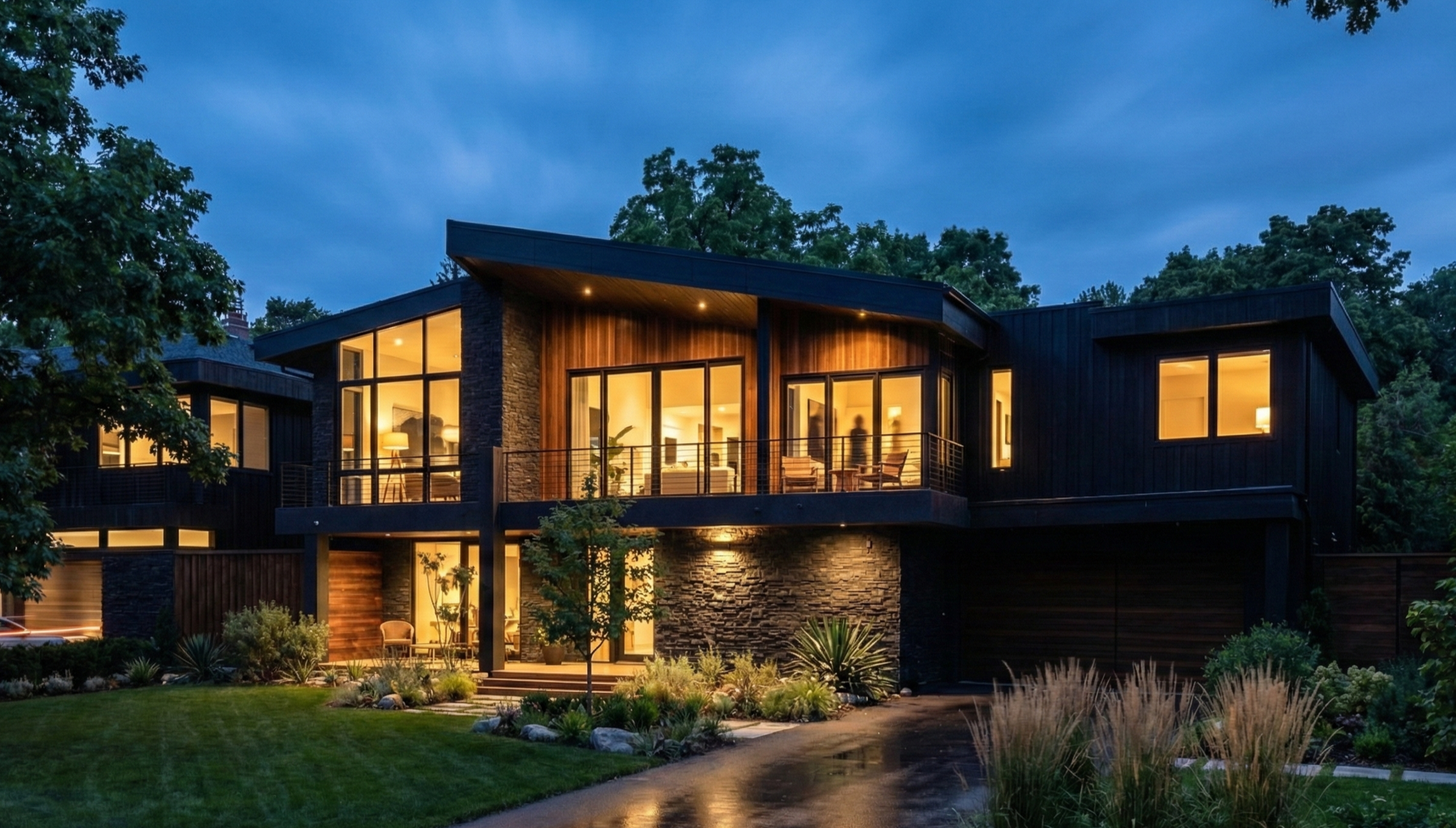
Anatomy of "Atmosphere": Beyond Decoration
What makes a house feel right?
It's not expensive furniture. It's not the brand of faucet in the powder room. It's something harder to name: spatial psychology. The way a room breathes. The interplay between openness and containment.
Many studios design for the magazine shot—spaces that look incredible when empty but feel cold or awkward in daily life. Our philosophy is simpler: we design for how you actually live.
We analyze invisible factors:
Visual Hygiene
We design integrated storage so that visual clutter disappears. When surfaces are clear, architecture (and your mind) can breathe.
Privacy vs. Connection
Especially on narrow urban lots—common in Toronto neighborhoods like The Annex or Rosedale—the challenge is inviting light in without sacrificing intimacy. We use internal courtyards, strategic skylights, screening lattices that act as veils.
Flow of Movement
How do you move from your morning coffee to your workspace? Architecture should facilitate life, not obstruct it.
These aren't aesthetic choices. They're the foundation of how a space feels to inhabit.
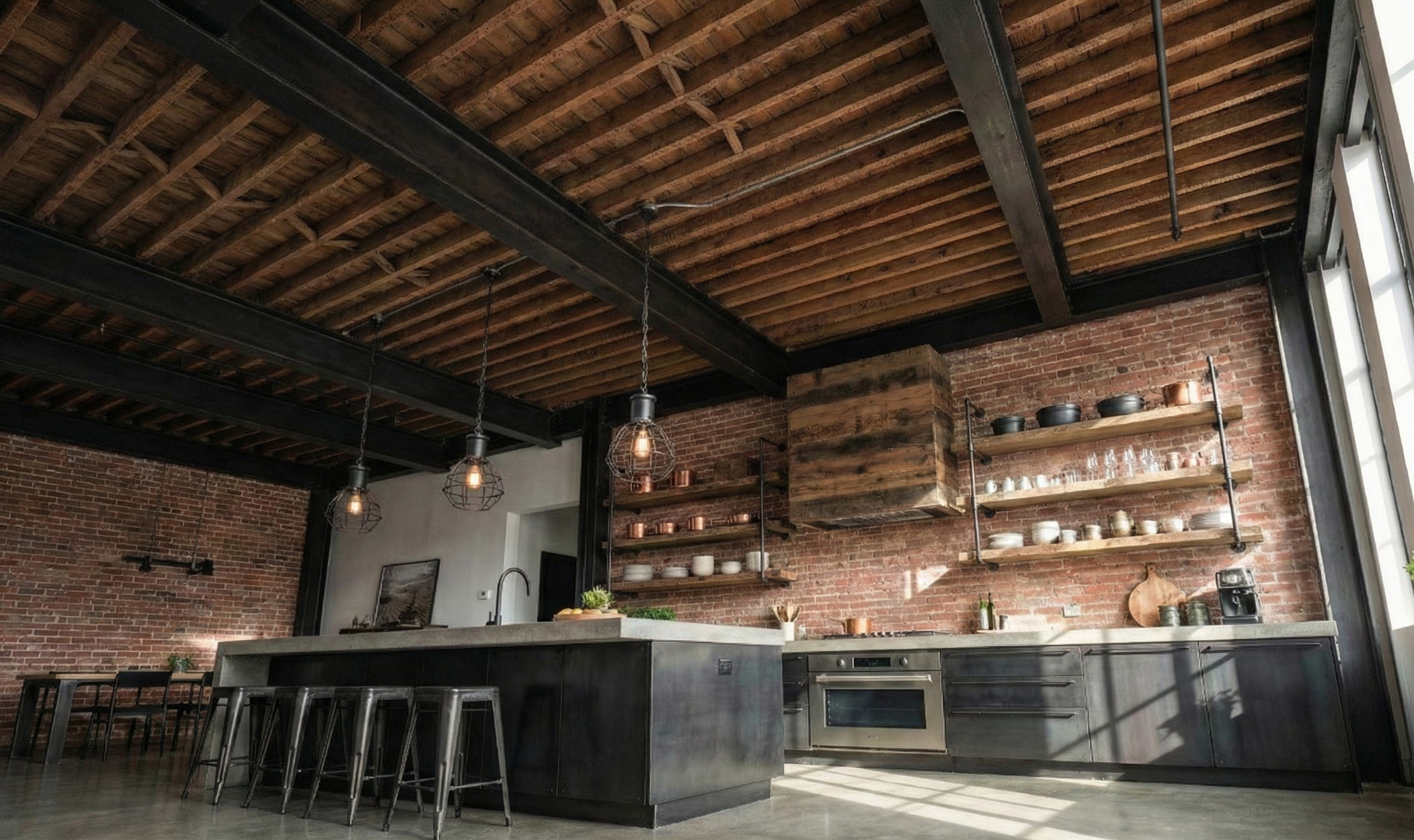
Honest Materiality: The Beauty of Aging Well
In a world of synthetic finishes and surface-level imitations, we advocate for honest materiality.
When you see brick in our renders, it's not a generic texture pulled from a library. We're thinking of reclaimed brick—something with weight and history. When you see wood, we're specifying oak or walnut with a particular grain and finish. Concrete means polished or raw, cast in place or precast, with a specific mix ratio.
Why does this matter at the concept stage?
Because natural materials possess a quality that synthetics don't: patina. A well-designed home should look better in ten years than the day it opens. By defining materials precisely from the start, we ensure two things:
Timeless Aesthetic
Your home won't look dated when this year's trends shift.
Supply Feasibility
We don't specify "a gray material." We specify something we know exists, can be sourced, and can be installed properly.
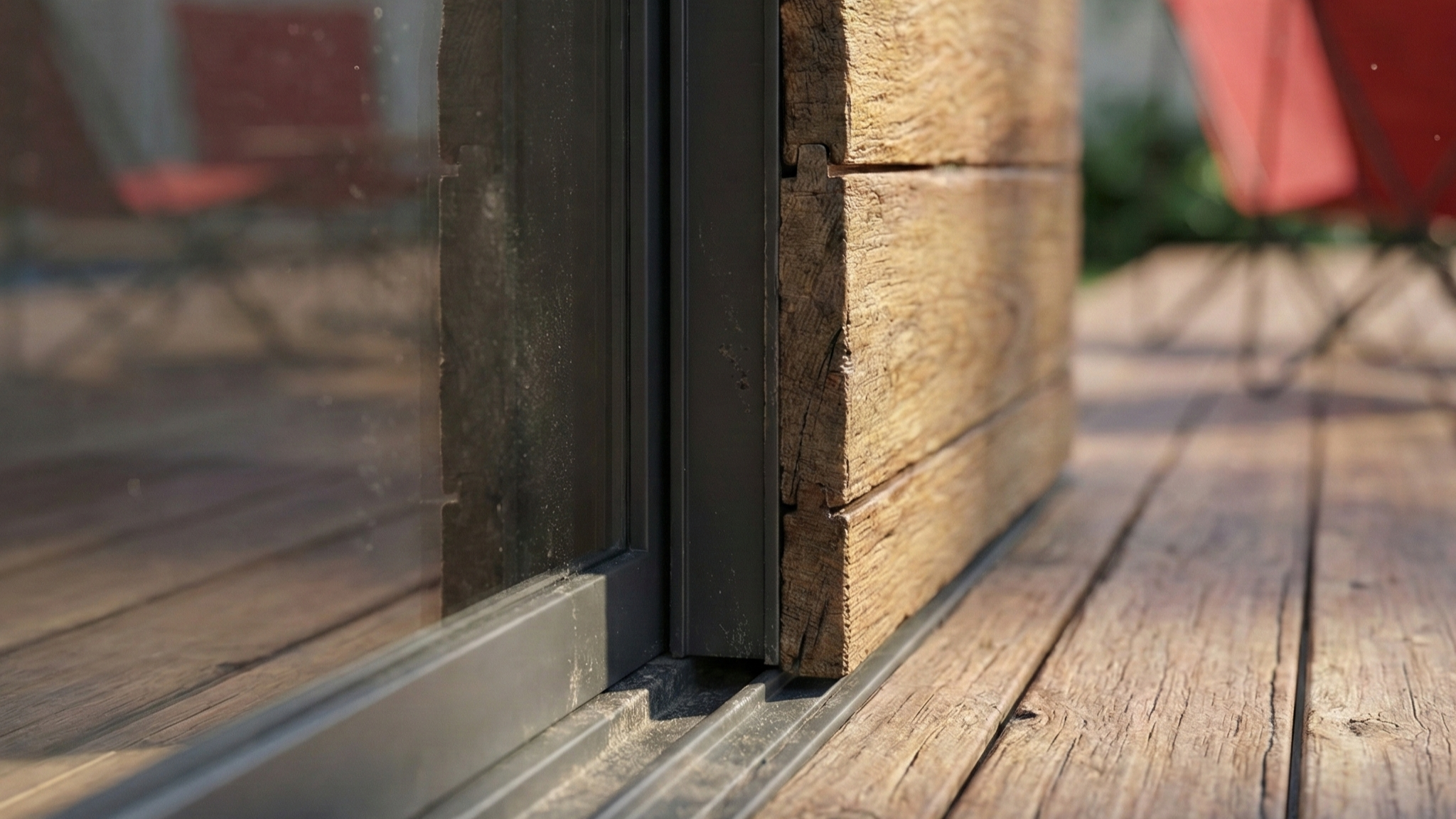
The Render as a "Digital Twin"
This is where our methodology diverges from the conventional.
Traditionally, an architect delivers 2D plans—black lines on white paper—and maybe an artistic sketch. The client is left to imagine the result. Often, they imagine something completely different than what the architect has in mind.
We produce what we call a Digital Twin of the concept. Using advanced visualization tools, we simulate reality with precision. This allows us to:
Test Solar Lighting
We know exactly how much light will enter your living room at the winter solstice versus the summer solstice.
Validate Scale
We eliminate the syndrome of "the room feels too small" because you've already walked through it virtually.
This level of detail transforms our visuals into a contractual tool. What you see is, quite literally, what we aim to execute.
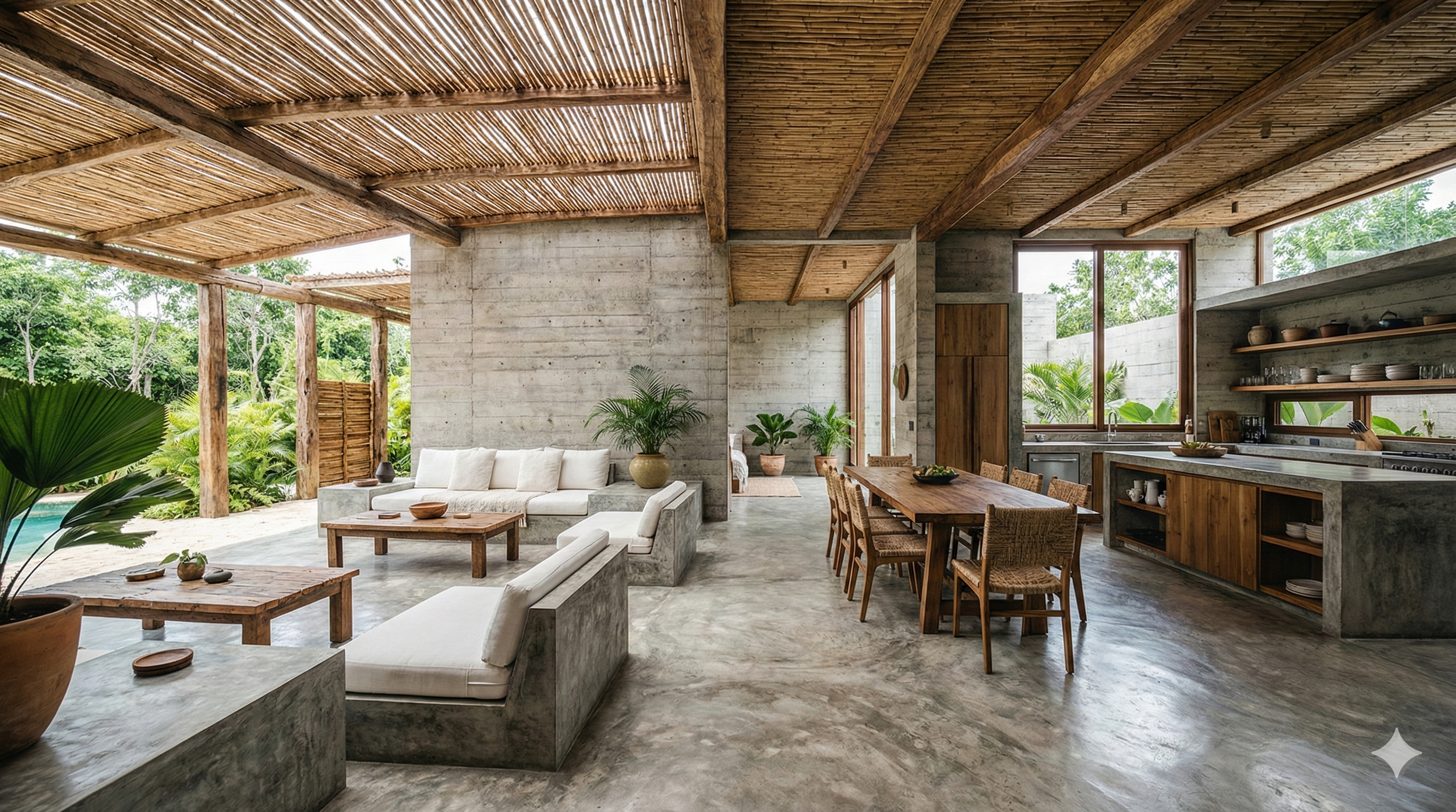
Avoiding the "Frankenstein" House
One of the biggest risks of building without a comprehensive concept is ending up with what we call a "Frankenstein" house—a disjointed collection of Pinterest ideas that don't speak to one another.
"I want the kitchen from this photo."
"The facade from this one."
"And the bathroom from that hotel."
The result is usually an aesthetic and functional disaster.
Our role as strategic designers is to take your desires—all of them—and filter them through a cohesive design language. We create a common thread: a material, a color palette, a geometric form that ties the entire home together.
This ensures that when you walk through it, you feel peace and order, not chaos.
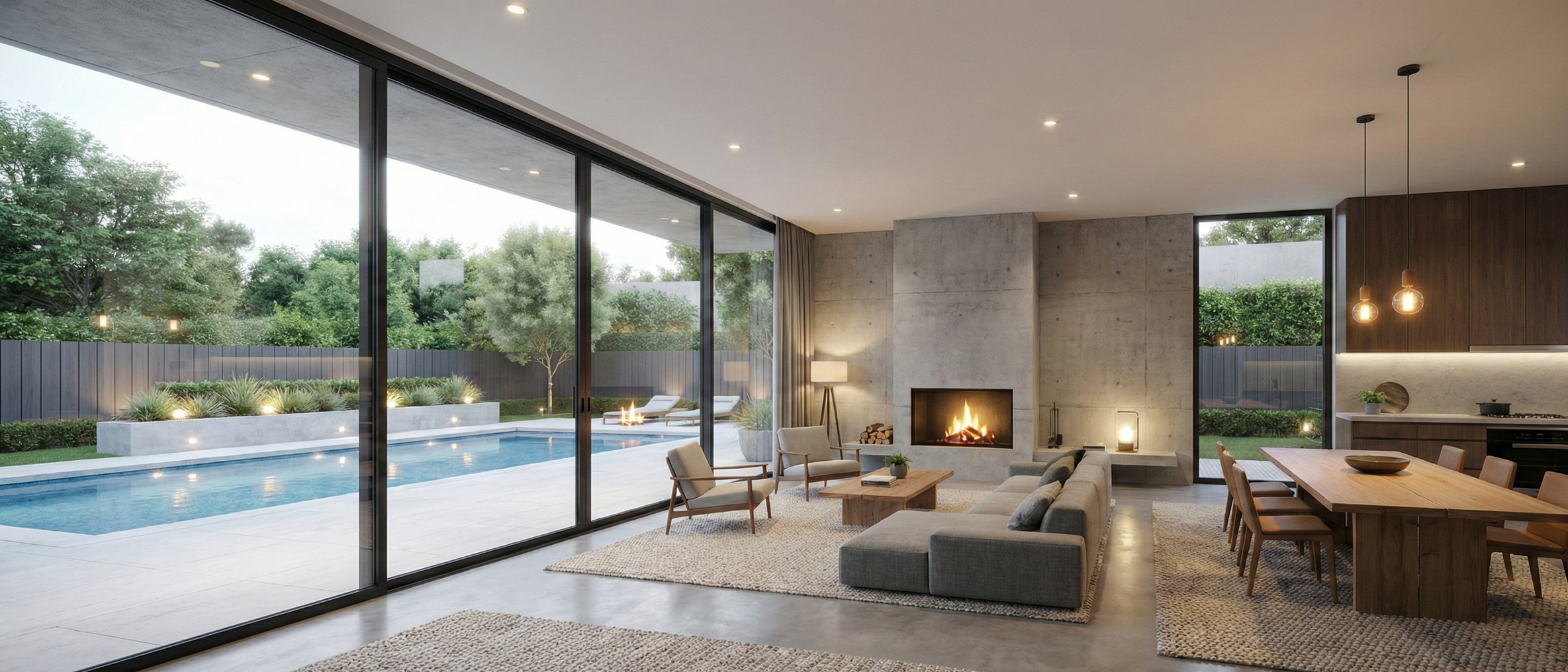
Certainty is the New Luxury
In an architectural project, true luxury isn't marble or gold faucets.
True luxury is certainty.
Certainty that the design is buildable. Certainty that the budget is realistic. And certainty that the final space will make you feel exactly how you dreamed.
At Atmosphere Studio, we don't improvise on site. We define the atmosphere first—with technical rigor and aesthetic intention—so that construction becomes simply the final act of making it tangible.
Your vision deserves more than a sketch. It deserves a master plan.
Ready to visualize the potential of your property?
Don't start your project blindly. Let's talk about how strategic conceptual design can save you time, money, and stress.